Why Gandhi Didn’t Stop Bhagat Singh | Historical Truth Explained
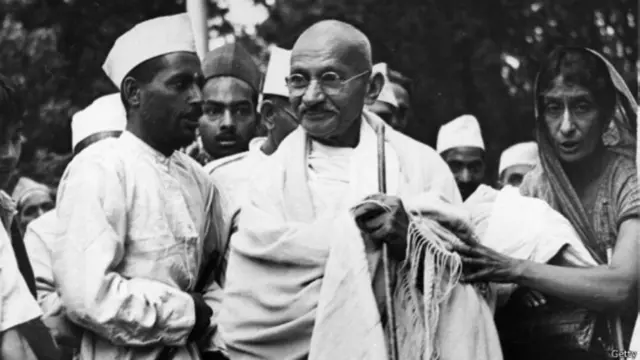
Gandhi arrived in India in 1915 with experience in Satyagraha and quickly dominated the Indian political scene. Meanwhile, the burgeoning Bhagat Singh embraced the path of violent revolution. However, they shared many commonalities, including prioritizing the interests of the country's poor. Their vision of freedom was not merely political. Both desired to free the nation's people from the shackles of exploitation and worked towards this end.
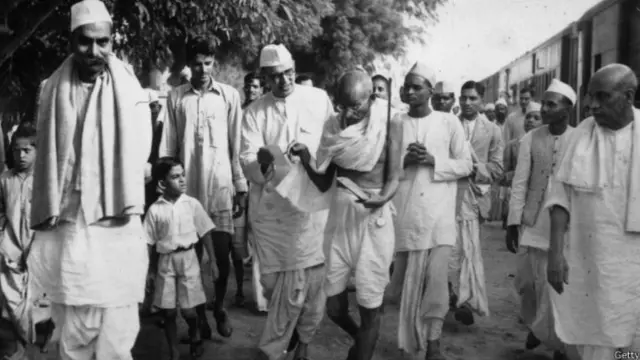
(Young and old alike, everyone longs to see him.)
Despite this contradiction, they also shared some similarities. Bhagat Singh was an atheist, while Gandhi was a staunch believer. However, both opposed the spread of hatred in the name of religion. In 1928, senior Congress leader Lala Lajpat Rai was injured by police batons during a protest against the Simon Commission. He died a few days later. Bhagat Singh did not agree with the politics of Lalaji in the last years of his life and he openly opposed him. But Bhagat Singh was very angry after seeing the condition of Lalaji injured by the batons of the British police officers. To take revenge for this, Bhagat Singh along with his comrades planned to kill Police Superintendent Scott. But due to the mistake of one of his comrades, 21 year old police officer Sanders was killed instead of Scott. Bhagat Singh could not be arrested by the police in this case. But some time later, he threw a bomb in the Assembly. At that time, Sardar Patel's elder brother, Vitthalbhai Patel, was presiding over the proceedings as the first Indian President. Bhagat Singh did not want to cause any casualties, but he wanted to convey the truth of the country to the deaf British government. After throwing the bomb, Bhagat Singh and Batukeshwar Dutt could have fled, but they surrendered. At the time of their arrest, Bhagat Singh was still carrying his revolver. Later, it was proven that this revolver was used in the murder of police officer Saunders. Therefore, Bhagat Singh, who was caught in the Assembly bombing incident, was charged with the serious crime of Saunders' murder and hanged. After the Dandi March in 1930, the conflict between the Congress and the British government was at its peak. Meanwhile, the British government invited various leaders to London to participate in the Round Table Conference to discuss reforms in India's political system. Gandhi and the Congress did not participate in this first Round Table Conference, and this The conference remained inconclusive. At the second conference, the British government decided to adopt a path of dialogue instead of conflict to avoid a similar outcome as the first. Negotiations began between Viceroy Irwin and Gandhiji on February 17, 1931. Following this, an agreement was reached between the two on March 5, 1931. This agreement stipulated the release of all prisoners captured during the non-violent struggle. However, Bhagat Singh, sentenced to death for treason, was not granted a pardon. Besides Bhagat Singh, many other prisoners were denied pardons in similar cases. This is where the controversy began. The question was raised: how could a compromise be reached with the British government while Bhagat Singh and his other comrades were being punished? Pamphlets addressing this issue were distributed throughout India. Communists were displeased with this agreement and began protesting against Gandhiji in public meetings.
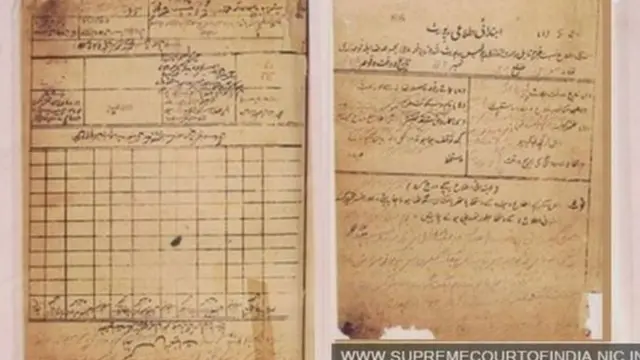
(The FIR was written in Urdu at that time.)
On March 23, 1931, Bhagat Singh, Sukhdev, and Rajguru were hanged. This sparked a wave of outrage among the people. However, this anger was directed not only at the British but also at Mahatma Gandhi, because he had not insisted that "if Bhagat Singh's execution is not pardoned, there will be no agreement." On March 26, 1931, the Congress session began in Karachi, "where Sardar Patel became the president of the Congress for the first and last time." When Gandhi arrived there on March 25 to participate in the session, he was met with protests. He was greeted with garlands made of black cloth and slogans like "Gandhi is dead" and "Gandhi go back." Gandhi described this protest as a mild expression of "their" deep anguish and the anger stemming from it, and he said that "these people have shown their anger in a very dignified manner." According to newspaper reports, on the afternoon of March 25, many people arrived at the place where Gandhi was staying. According to the reports, "these people started shouting, 'Where is the murderer?'"
Then they met Jawaharlal Nehru, who took them to a tent. He spent three hours talking to them and trying to persuade them, but in the evening, they returned to protest again. Within the Congress party, several people, including Subhas Chandra Bose, also opposed the Gandhi-Irwin Pact. They believed that if the British government was not willing to commute Bhagat Singh's death sentence, there was no need for an agreement. However, the Congress Working Committee was fully in support of Gandhi.


Comments
Post a Comment